Abnormalities: How the Human Body Adapts and Overcomes
It’s astonishing what the human body can endure—and how it learns to adapt to even the rarest abnormalities. One powerful example is Tessa Evans, whose extraordinary story has not only influenced modern medicine but also touched hearts around the world. Born without a nose on Valentine’s Day in 2013, Tessa’s life has become a symbol of resilience, medical innovation, and unconditional love.
A Rare and Little-Known Condition
Tessa Evans was diagnosed with Bosma arhinia microphthalmia syndrome (BAMS)—an extremely rare genetic condition that affects the development of the nose, eyes, and puberty, and in some cases, parts of the brain. Fewer than 100 cases have been recorded worldwide. The condition was first formally documented in Vietnam in 1981, though historical references suggest it may have existed long before then.
Today, Tessa is part of a very small and remarkable group of individuals living with this condition—each one helping doctors better understand it and improve future treatments.
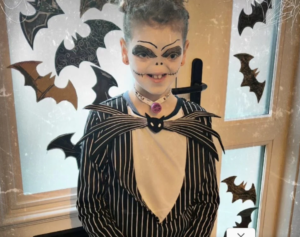
A Journey That Changed Medical History
Tessa’s condition made her the youngest patient ever to undergo groundbreaking medical procedures of this kind. Her parents, Gráinne and Nathan Evans from Maghera, Northern Ireland, were completely unprepared for the diagnosis, as no abnormalities were detected during pregnancy. What began as shock and heartbreak soon turned into determination and hope.
At just two weeks old, Tessa underwent her first surgery to receive a tracheostomy tube, which allowed her to breathe and eat safely. By the age of two, she became the youngest person to receive a cosmetic nasal implant—a pioneering procedure made possible through 3D printing technology.
As she grows, the implant is gradually expanded, helping form a more permanent nasal structure. Combined with medical tattoo artistry, these innovations aim to reduce the need for repeated surgeries and support more natural facial development over time.
Ongoing Challenges and Safety Concerns
Despite the success of her treatments, Tessa’s condition still presents daily challenges. Without a sense of smell, she lacks an important natural warning system for dangers such as smoke, gas leaks, or spoiled food. Her parents remain constantly vigilant, emphasizing how crucial awareness and long-term support are for children with rare conditions.
Inspiring Hope and Driving Change
Tessa Evans’ journey has already made a difference far beyond her own life. Her courage—and her parents’ determination—has inspired other families facing similar diagnoses. In fact, another child in the UK has since undergone comparable treatments, guided by the path Tessa helped pave.
Often described as “charming,” “fearless,” and “extraordinarily brave,” Tessa continues to challenge perceptions and push medical progress forward. Her family shares updates through their Facebook page, “Tessa; Born Extraordinary,” which is followed by nearly 10,000 people who draw inspiration from her story.
Conclusion
Tessa Evans’ rare condition may have brought extraordinary challenges, but her life is a powerful reminder of what resilience, love, and medical innovation can achieve together. By inspiring change and offering hope to others, Tessa proves that being born different does not limit what’s possible—it simply rewrites the path forward.