Connie Culp Became the First-Ever Face Transplant Patient in the U.S.: Inside Her Remarkable Story
In 2004, Connie Culp’s life changed in an instant when her husband shot her in the face, destroying nearly 80 percent of her features, including her nose and cheeks. She was left unrecognizable — yet somehow, she survived.
Her future was uncertain, and the emotional wounds often cut just as deeply as the physical ones. During a simple trip to the store, a child once pointed at her and called her a “monster.” Moments like that revealed just how difficult her new reality had become.
But five years later, Connie would receive something extraordinary: a second chance at life.
At the Cleveland Clinic, a team of surgeons performed the first near-total face transplant in U.S. history — a groundbreaking procedure that lasted 23 hours and required the coordination of dozens of medical professionals.
The result was nothing short of remarkable.
A Love Story That Turned Dark
Connie and her husband, Tom, met as teenagers and ran off together at just 16, chasing a future they barely understood. Eventually, they opened a bar in a small Appalachian town.
From the outside, it may have looked like a typical marriage. But Connie later revealed that Tom controlled her in ways that felt painfully familiar.
“My relationship with Tom wasn’t any different than living with my dad. He told me what to do, and I did it… I thought it was a normal way of life,” she told Oprah.
Over time, Connie found the courage to stand up for herself — something her husband wasn’t prepared for.
“I’m a good person, and I don’t deserve that,” she recalled telling him.
That shift would precede the moment that changed everything.
The Night That Changed Her Life
On September 21, 2004, Tom accused Connie of flirting with another man. In a burst of violence, he shot her in the face before turning the gun on himself. Both survived.
Severely wounded, Connie somehow made it downstairs and reached her twin sister, Bonnie, who immediately called for help.
The damage was catastrophic. The blast shattered her nose, cheeks, eye socket, and the roof of her mouth. Only her forehead, upper eyelids, lower lip, and chin remained intact.
Yet shock shielded her from the pain.
“Your adrenaline’s going so fast that there was no pain,” Connie said.
A nearby emergency medical technician packed her face with ice to slow the bleeding — a quick action that likely saved her life.
Later, Connie described the terrifying sensation:
“I could feel my face just sliding down.”
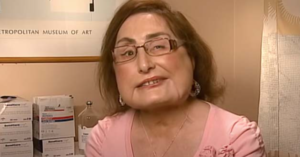
Learning to Live Again
After the attack, Connie was partially blind, unable to smell or speak normally, and forced to breathe through a surgical opening in her neck. Doctors wired her jaw shut, and the deterioration of her palate caused her to lose much of her upper mouth.
Her husband was eventually sentenced to seven years in prison. Connie chose forgiveness but later divorced him.
“Now, it’s a new beginning. I have a new face. I’m a new me,” she told ABC.
Over the next five years, she endured roughly 30 reconstructive surgeries, all while waiting for a miracle that had never before been achieved in the United States.
Still, she tried to live as normally as possible — even in the face of cruelty from strangers.
During one shopping trip, a child pointed at her and said:
“You said there were no real monsters, Mommy — and there’s one right there.”
Connie calmly replied:
“I’m not a monster… I’m a person who was shot.”
The Miracle Donor
In December 2008, hope finally arrived. Doctors found a compatible donor: Anna Kasper, a generous woman whose family believed she would have wanted to help someone in need.
Anna had unexpectedly collapsed on her back porch and passed away. Because she was already an organ donor and wished to be cremated, her family felt certain this was the right decision.
“For there to be a match was a miracle in itself,” her husband Ron said.
“We knew it was what Anna would’ve wanted.”
A Surgery That Made History
On December 10, 2008, surgeons carefully transplanted skin, muscles, veins, arteries, teeth, and bone onto Connie’s face in a marathon 23-hour operation.
Dr. Maria Siemionow, who led the surgical team, reflected on the magnitude of the moment:
“This is amazing — technically, surgically, but also philosophically. The face of someone else is being adopted and accepted by the recipient.”
Against enormous odds, the transplant succeeded.
For the first time in years, Connie could begin imagining a life that felt whole again.
The Long Road Forward
Recovery was far from easy. Connie required constant monitoring, regular biopsies, and lifelong anti-rejection medication. There were real fears her body might reject the transplant — a complication that could have been fatal.
But Connie persevered.
Her journey became more than a medical milestone; it became a story of resilience, compassion, and the extraordinary possibilities of modern medicine.
Most of all, it proved something powerful:
Even after unimaginable tragedy, a new beginning is possible.