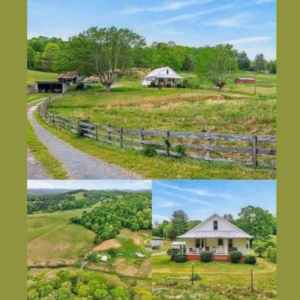
At first glance, the solid stone ranch sitting quietly on its oversized lot in East St. Louis seems almost untouched by time. The structure stands with a quiet confidence, its heavy stone exterior and wide footprint giving it the kind of presence modern homes often lack. Surrounded by open space and mature trees, the property feels like a forgotten piece of another era—stubbornly holding its ground as the world around it changes.
The welcoming front arch hints at charm and craftsmanship rarely found in newer construction. A newer roof suggests that someone, at some point, tried to preserve the home’s integrity. From the street, it appears solid, even inviting. Yet the listing attached to the property immediately changes the tone of the story.
No interior tours.
No photographs inside.
Cash buyers only.
Sold strictly as-is.
Suddenly, curiosity takes over.
Why would a home with such strong curb appeal remain sealed off from potential buyers? What condition could possibly require this level of caution? Is it simply cluttered and neglected after years of abandonment, or does the interior hide extensive damage invisible from the outside? The lack of access transforms the house from an ordinary real-estate listing into something closer to a mystery.
The three-bedroom ranch has clearly lived many lives. One can almost imagine the decades that unfolded behind those walls: children racing through hallways, family dinners around a crowded table, quiet evenings under dim yellow lights, and years of memories layered into every room. Homes like this often become time capsules, frozen somewhere between the past and the present.
Perhaps the inside still carries traces of another generation—wood-paneled walls, faded wallpaper, heavy drapes untouched for decades, or furniture left exactly where it once stood. In many aging homes, owners eventually reach a point where maintenance becomes overwhelming. Small repairs turn into larger problems. Water damage spreads quietly. Floors weaken. Electrical systems age. Before long, the house becomes too difficult—or too expensive—to fully restore.
The “cash only” requirement tells its own story. Typically, homes listed this way cannot qualify for traditional financing because lenders view them as risky. That could mean structural issues, outdated systems, mold, foundation concerns, or extensive interior deterioration. The phrase “as-is” serves as another warning: what buyers see from the outside may be very different from what waits inside.
And then there’s the strict ban on tours and interior photos, which only deepens the intrigue.
Sometimes sellers restrict access because the property is unsafe. Other times it may still contain personal belongings, sensitive conditions, or legal complications. In certain cases, homes become so packed with forgotten possessions that walking through them becomes nearly impossible. There may also be concerns about liability if floors are unstable or sections of the structure are compromised.
Yet despite all the unknowns, the property continues to pull attention. There’s something deeply compelling about homes like this—places suspended between decay and possibility. To some buyers, it’s a warning. To others, it’s an opportunity.
Investors may see potential beneath the uncertainty: original hardwood floors hidden under old carpet, stone fireplaces waiting to be restored, spacious layouts impossible to find in modern construction, or solid craftsmanship worth saving. Renovators often speak about the thrill of uncovering what time concealed. Behind damaged walls and dust-covered rooms, there can still be beauty.
But restoring a property like this requires more than money. It demands patience, vision, and a willingness to face surprises. Every hidden corner may reveal another challenge: leaking pipes, damaged insulation, cracked foundations, or years of neglect layered one problem over another. Homes that sit quietly for too long tend to keep secrets.
Still, the mystery itself becomes part of the appeal.
In an era where nearly every home is professionally staged, filtered, photographed, and instantly shared online, a house that refuses to reveal itself feels strangely rare. No polished interior images. No carefully angled listing photos. No virtual tours. Just a stone ranch, a quiet lot, and a list of restrictions that leaves room for endless speculation.
Maybe the interior is frozen in the 1970s. Maybe it’s filled with forgotten antiques. Maybe it’s suffered years of damage hidden behind those thick stone walls. Or maybe the reality is simpler than the imagination allows.
Whatever waits inside, one thing is certain: this East Saint Louis ranch has already accomplished something unusual. Before a single buyer steps through the door, it has turned an ordinary real-estate listing into a story people can’t stop thinking about.