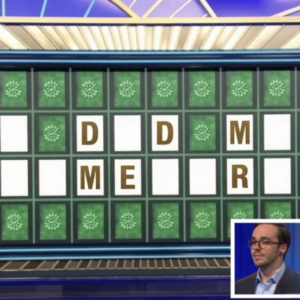
Finding it felt less like discovering an old tool and more like uncovering a secret that had been waiting quietly for decades. Buried beneath layers of forgotten hardware, dusty wrenches, rusted bolts, and scraps of metal tucked away in the corner of an aging toolbox, it immediately stood out. Small enough to fit comfortably in one hand yet surprisingly heavy for its size, the object seemed to carry a sense of purpose that was no longer obvious.
At first glance, it looked familiar and completely unfamiliar at the same time.
There was no label stamped into the metal. No manufacturer’s name. No patent number. No instructions tucked away nearby. Just a solid, carefully crafted piece of metal shaped in a way that suggested it had once performed a specific job with precision and reliability. Every curve appeared intentional. Every edge seemed designed for a reason. Yet that reason had somehow been lost to time.
Naturally, curiosity took over.
The object was turned over again and again, examined from every angle in search of clues. Was it missing a piece? Had part of it broken off long ago? Was it meant to attach to something larger? The more closely it was studied, the more mysterious it became. Instead of providing answers, each detail seemed to create new questions.
Its worn surface hinted at years of use. Tiny scratches and polished areas suggested countless hours spent in someone’s hands. This wasn’t a decorative object or a forgotten trinket. It had clearly been a working tool—something relied upon, something useful enough to earn a permanent place in a toolbox.
But useful for what?
Without context, imagination rushed in to fill the void.
Perhaps it had belonged to a mechanic working long days in a garage decades ago. Maybe it was part of a specialized trade, used by someone whose profession has largely disappeared from modern life. It could have been a machinist’s aid, a carpenter’s jig, a railroad tool, or a device designed for a task so specific that only a handful of people would recognize it today.
Every possibility seemed equally plausible.
The mystery became even more intriguing because the object didn’t appear particularly complicated. Unlike machines with gears, springs, or moving parts, this piece seemed almost deceptively simple. Yet simplicity often hides expertise. Many of the most effective tools ever created are nothing more than carefully shaped pieces of metal designed to solve a very particular problem.
That realization opened another line of thought.
Perhaps the reason it seemed so mysterious wasn’t because it was rare or valuable, but because the world that once understood it has changed. Tools that were once common can become unrecognizable within a generation or two. Entire industries evolve. Techniques disappear. Skills are passed down less frequently. What was once an everyday object can become an artifact almost overnight.
In that sense, the mystery wasn’t really about the tool itself.
It was about memory.
Every object carries traces of the people who used it. Somewhere in the past, someone likely reached for this tool dozens, perhaps hundreds, of times without giving it a second thought. It was simply part of the workday. Part of a routine. Part of a skill they had mastered. To them, its purpose was obvious.
Now, years later, that obvious purpose has become a puzzle.
There is something strangely powerful about that transformation. When an object becomes separated from its story, it changes from a practical tool into a historical question. Suddenly, the imagination begins reconstructing the life around it. Who owned it? What kind of work did they do? What did their workshop look like? How many projects passed through their hands while this simple piece of metal sat nearby, ready to be used?
The answers may never be known.
Perhaps someone will eventually identify it as a common clamp, a specialized bracket, or a fixture used in a trade that still exists today. The mystery could disappear in an instant with a single explanation from someone who recognizes it immediately.
Yet part of the fascination lies in not knowing.
For a brief moment, the object exists in a space between artifact and mystery, between history and imagination. It reminds us that countless ordinary things once played important roles in people’s lives before quietly fading into obscurity. Tools, machines, household items, and everyday objects are often discarded or forgotten long before anyone thinks to record their stories.
That is what makes discoveries like this so captivating.
The object itself may ultimately prove to be something simple and practical. It may have no extraordinary history and no remarkable value. But its true significance lies elsewhere. It serves as a reminder that every worn tool, every forgotten object, and every dusty relic once belonged to a world that felt as immediate and familiar to someone else as our own world feels to us today.
In the end, the mystery is not merely about identifying a piece of metal.
It is about rediscovery.
It is about the way a forgotten object can suddenly bridge the gap between past and present. It is about realizing how quickly knowledge can fade and how much history can be hidden inside the most ordinary things.
Whether it turns out to be a clamp, a jig, a bracket, or something entirely unexpected hardly matters. What lingers is the sense of wonder it created—the feeling that even the simplest object can carry echoes of another time, another craft, and another life.
And sometimes, that unanswered question is far more interesting than the answer itself.