Optical illusions have a unique way of fascinating people of all ages. They reveal just how complex and powerful the connection between our eyes and brain truly is. Even when we understand that we’re being tricked, illusions can still leave us stunned by how different reality looks from what we think we see.
Over the years, countless optical illusions have been carefully designed to confuse our senses. One of the most intriguing examples is the Ames Window illusion. At first glance, it appears to swing back and forth, yet in reality, it is rotating a full 360 degrees. The effect is so convincing that it has even been used to animate famous works of art, including Van Gogh’s Starry Night, creating an eerie sense of movement.
A Hidden Detail You Probably Missed
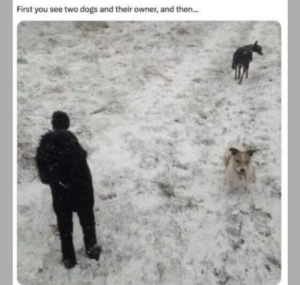
Get ready for a surprise. In the image linked to this illusion, there aren’t just two dogs as most people assume — there are actually three. The twist? The third “dog” isn’t a dog at all. It’s a human figure cleverly disguised as a black poodle.
Take another look. That figure that seems to be a person wearing a coat and hat? It’s actually the poodle facing the camera. The fluffy tail creates the illusion of a hat, while the dog’s head and body resemble a scarf or fur stole. Once this detail is pointed out, the hidden figure suddenly becomes easier to spot.
Still struggling to see it? You’re not alone. The dark fur of the poodle blends shadows and shapes together, making it difficult for the brain to separate details. Instead, our minds rely on outlines — and that outline strongly resembles a human figure turned away, which is why the illusion works so effectively.
Optical illusions like this remind us that what we see isn’t always the full story. They highlight how easily our perception can be influenced and just how fascinating the human mind truly is. The next time an illusion catches your eye, take a closer look — you never know what hidden details you might uncover. 👀✨