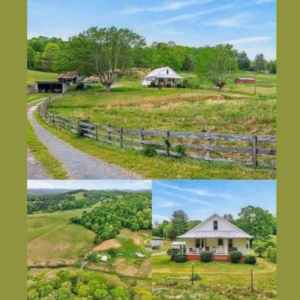
In a quiet corner of Kentucky, the Huddleston family has cared for their 1,200-acre farm in Mason County for generations. It’s a place where mornings begin before sunrise, where the rhythm of daily life is tied to the land, and where raising cattle is more than a livelihood—it’s a tradition passed down through time. Through prosperous years and difficult seasons alike, the family has remained rooted in the same soil, building not just a business, but a legacy shaped by hard work, resilience, and deep personal connection.
Over decades, the farm has become something far greater than property. It holds stories—of grandparents who first worked the land, of children who grew up learning its rhythms, of challenges faced and overcome together. Every fence line, every pasture, every acre reflects years of care and commitment. For the Huddlestons, it is a living record of their family’s history and identity.
That legacy was recently tested in an unexpected way.
A major company approached the family with an offer of $26 million to purchase a large portion of their land, with plans to build a data center. On the surface, it’s the kind of offer that could transform a family’s financial future overnight. For many, it would be difficult to refuse. But for the Huddlestons, the proposal raised questions that money alone couldn’t answer.
Their decision isn’t centered on what they would gain—but on what could be lost.
They have voiced concerns about the long-term impact such a development could have on the land and surrounding community. Data centers require significant resources, particularly water and energy, and the family worries about how this demand might affect local systems. There is also the irreversible loss of farmland to consider—land that has sustained both their family and the local economy for generations.
For them, this isn’t just about acreage—it’s about stewardship. The idea that land is not simply owned, but cared for and passed on. It carries a responsibility to future generations, not just to preserve what exists, but to protect its ability to continue providing, growing, and sustaining life.
Local officials have pointed out the potential economic benefits of the project. New jobs, increased investment, and improved infrastructure could bring measurable advantages to the region. These are real considerations, and the family does not ignore them. But they weigh those benefits against a longer timeline—one that extends beyond immediate gains and looks toward what the land will mean decades from now.
For the Huddlestons, value cannot be measured only in financial terms. It is measured in continuity, in heritage, and in the quiet understanding that some things, once changed, cannot be restored.
Their story reflects a broader challenge facing many rural communities today. As development expands and demand for land grows, families are increasingly confronted with difficult choices. Progress can bring opportunity, but it can also reshape landscapes, traditions, and ways of life that have existed for generations.
In choosing to hold onto their farm, the Huddlestons are making a statement—one that goes beyond their own situation. They are choosing to protect something intangible but deeply meaningful: a connection to the past, a responsibility in the present, and a commitment to the future.
It’s a reminder that land is more than space—it’s memory, identity, and purpose woven together over time.
Ultimately, their decision is not just about turning down an offer. It’s about defining what truly matters. In a world where value is often reduced to numbers, the Huddlestons’ choice stands as a quiet but powerful example that some things—like legacy, community, and the enduring bond between people and the land—are simply priceless.