Her life took an unexpected turn—and it happened right after the show’s finale.
When her mother suddenly appeared on set, saying her father had been rushed to the hospital, everything shifted. Heather didn’t hesitate. She dropped everything and rushed to a hospital in Santa Monica, expecting the worst.
But when she arrived, it wasn’t her father waiting.
It was her family.
Concerned. Silent. Watching.
That moment wasn’t about a medical emergency—it was about her. It was an intervention, carefully planned by the people who loved her most. And it marked the beginning of a life-changing turning point for Heather Thomas.
At just 28, her life and career were forced onto a new path.
Long before that moment, Heather had already built a name for herself. With a natural talent and striking beauty often compared to icons like Farrah Fawcett and Heather Locklear, she began working young—hosting a show for NBC at just 14. Determined to build a future in entertainment, she studied film and theater at University of California, Los Angeles, eventually landing her breakthrough role in The Fall Guy in 1980.
As Jody Banks—a fearless stuntwoman and bounty hunter—she became one of the most recognizable faces of the 1980s, starring alongside Lee Majors. On the surface, everything looked perfect.
Behind the scenes, it wasn’t.
Heather later revealed that her struggles began early. Substance use started in her school years and escalated over time. By college, cocaine had become part of her routine, and during her time on The Fall Guy, it worsened. The pressure to maintain a certain image only deepened the cycle.
“At first, I thought it was helping me,” she admitted—staying up all night, then working through the next day. But the cost became impossible to ignore. Her weight dropped dangerously low. She struggled to stay awake on set. At one point, she even collapsed in front of her co-star.
That’s when her family stepped in.
The staged hospital call wasn’t deception—it was desperation. A final attempt to save her before things went too far.
Heather entered rehab facing serious health issues, including pneumonia and damage to her lungs and kidneys. Looking back, she acknowledged the truth: without that intervention, she might have lost everything.
Recovery wasn’t instant, but it was real.
After rehab, she married Allan Rosenthal, co-founder of Cocaine Anonymous, though the marriage later ended. In 1986, she survived another major setback after being struck by a car, suffering severe leg injuries. Still, she returned to work, taking on smaller roles in films and television.
By the 1990s, her focus began to shift.
She stepped away from the pressures that once defined her life and built something more stable. In 1992, she married entertainment lawyer Skip Brittenham, later becoming a mother to her daughter, India Rose.
In recent years, Heather has dedicated herself to activism, working with organizations like the Rape Foundation and the Amazon Conservation Team. She’s also spoken openly about her past, embracing both her identity and her growth.
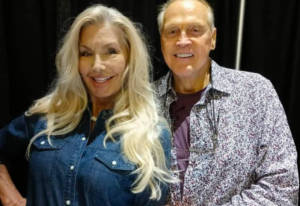
“Being a feminist doesn’t mean you should be ashamed of your body,” she said. “I don’t think I betrayed myself.”
Heather Thomas never returned to the same level of Hollywood fame—but that was never the point.
Her story isn’t just about success or struggle. It’s about survival, intervention, and the difficult, necessary path toward change.
And in the end, it proves something simple but powerful:
Sometimes, the moment everything falls apart… is the moment everything begins to change.