Claudia Cardinale’s emergence during the postwar flowering of Italian cinema was neither accidental nor merely ornamental; it represented the convergence of historical timing, personal determination, and a rare ability to translate emotional depth into visual storytelling. Born in Tunis to Sicilian parents, she carried a Mediterranean complexity that felt instantly cinematic—familiar yet mysterious, grounded yet radiant. Italian cinema of the late 1950s and early 1960s was searching for new faces capable of embodying realism without losing romance, and Cardinale arrived as the perfect answer. She was never the carefully manufactured ingénue typical of studio mythology; instead, she projected a natural presence that felt experienced, perceptive, and quietly confident even in moments of stillness. Directors quickly realized that her beauty never overshadowed narrative but instead deepened it, allowing her characters to exist with emotional contradictions intact. In her early performances, she demonstrated remarkable instinct, understanding when silence could carry emotion and when subtle expression could speak louder than dramatic display. This sensitivity aligned seamlessly with filmmakers redefining cinematic language—artists more interested in social truth and psychological complexity than spectacle. As Italian cinema wrestled with modernization, class tensions, and postwar identity, Cardinale’s performances became a human guide through those layered themes.
Her collaborations with legendary directors such as Luchino Visconti, Federico Fellini, and Sergio Leone elevated her status beyond stardom, establishing her as a creative partner in shaping meaning on screen. Each director brought a distinctive artistic vision, requiring flexibility and emotional range, and Cardinale consistently met those challenges with intellectual depth and artistic courage. In sweeping historical epics, she delivered grandeur without stiffness, anchoring large-scale narratives in emotional authenticity. In modernist cinema, she embraced ambiguity, allowing her characters to remain complex and unresolved rather than neatly defined. Working within a male-dominated industry that often prioritized image over creative voice, she quietly asserted interpretive authority, shaping her roles with thoughtful nuance. Her performances often balanced vulnerability with resilience, portraying women shaped by social forces yet never erased by them. Critics admired not only her elegance but her dedication to cinema as a serious artistic and moral medium capable of exploring power, desire, and human consequence.
The international expansion of her career throughout the 1960s and 1970s introduced new creative opportunities alongside significant professional challenges. Transitioning into Hollywood and other European film industries, Cardinale resisted becoming a standardized international export. Instead, she carefully selected projects that preserved artistic depth over commercial saturation. Navigating language differences, contractual pressures, and varying production environments tested her determination, yet she maintained authenticity across cultural boundaries. Whether performing in French, Italian, or English-language productions, she sustained a coherent artistic identity that audiences could recognize regardless of language or setting. Her career choices reflected a quiet defiance of the expectation that global success required abandoning individuality. She demonstrated that cultural specificity—accent, heritage, and emotional temperament—could serve as a bridge connecting audiences rather than dividing them. In doing so, she helped expand international perceptions of female leads, showing that intelligence, strength, and individuality could coexist with cinematic glamour.
As her career progressed and the film industry evolved, Cardinale’s relationship with fame matured into one defined by reflection and purpose rather than reinvention or nostalgia. She embraced roles as mentor, cultural ambassador, and participant in film festivals and retrospectives that connected historical cinematic movements to modern storytelling. Her public appearances carried authority shaped by experience yet softened by humility. She spoke of cinema as a living language—one that must evolve while preserving craftsmanship and artistic integrity. Younger filmmakers and actors frequently praised her openness and generosity, noting her willingness to share insight without imposing rigid formulas. This stage of her life highlighted an often-overlooked truth about artistic longevity: relevance is sustained through curiosity and adaptability rather than constant visibility. By remaining engaged without dominating the spotlight, she modeled a graceful form of artistic aging rooted in contribution rather than applause.
Beyond awards and filmographies, Cardinale’s lasting significance lies in the ethical consistency of her career. She navigated international fame while preserving personal authenticity, challenging an industry that often equated female desirability with disposability. Her performances offered alternative portrayals of womanhood—characters who were strong without losing tenderness, sensual without surrendering autonomy, and decisive without emotional rigidity. Off-screen, she supported artistic freedom, cultural dialogue, and respect for creative labor, reinforcing the idea that cinema functions both as entertainment and cultural expression. Audiences connected with this alignment between her personal values and her artistic choices, responding not only to her performances but to the integrity behind them. This consistency has allowed her influence to remain relevant even as cinematic trends and storytelling styles continue to evolve.
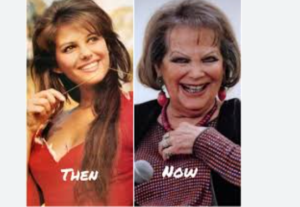
Examining Claudia Cardinale’s journey reveals less a contrast between past and present and more a continuous evolution guided by artistic instinct and emotional awareness. Her life mirrors the transformation of cinema itself—from national artistic movements to global cultural exchange, from theatrical grandeur to intimate realism and beyond. Throughout these changes, she has remained a symbol of balance, navigating tradition and innovation, public recognition and personal privacy, artistic discipline and human warmth. Her legacy extends beyond iconic performances or celebrated films; it lives in the standards she established for authenticity, creative independence, and endurance. True icons do more than reflect their era—they illuminate it, leaving a legacy that continues to inspire future generations of storytellers and audiences alike.