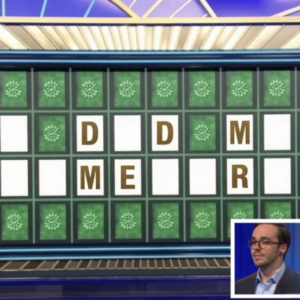
She walked onto that stage carrying her own story—hopes, nerves, a quiet kind of courage it takes just to stand under bright lights and speak. But the world didn’t see any of that. It saw a single detail, froze it in a screenshot, and within hours turned it into something else entirely.
The image spread faster than she could process. A stranger’s post became a wave. The wave became a storm. Comments flooded in—brutal, gleeful, relentless. Strangers who knew nothing about her life felt entitled to define it in seconds. Her name disappeared from the conversation, replaced by a nickname she never chose, one that reduced her to a single feature, a single frame. Headlines followed, circling the moment, amplifying it, packaging it as entertainment.
Behind the screen, though, the reality was quieter—and far heavier.
She turned her phone face down and left it there, not for minutes, but for days. Each notification felt like a warning. Each glance carried the risk of seeing something new, something sharper. Alone in her room, she replayed the video again and again, searching for the exact second everything changed. Trying to understand how a few minutes onstage—something she had likely prepared for, maybe even looked forward to—had been transformed into a global punchline.
That’s the strange cruelty of the internet. It doesn’t just observe—it reshapes. It can take a person and compress them into something smaller, flatter, easier to mock. A human life becomes a clip. A clip becomes a label. And suddenly, the complexity of who someone is—their history, their struggles, their personality—vanishes behind something as simple and superficial as appearance.
But not everyone joined in.
Amid the noise, there were quieter voices. People who paused before reacting. People who recognized that what others were mocking might not be cosmetic at all, but medical. A condition, not a choice. A reality, not a flaw. Their comments didn’t go viral in the same way—but they mattered. They shifted something, even if only slightly.
And then came something unexpected: offers of help. Dentists reaching out. Professionals willing to step in—not to “fix” a joke, but to support a person. It wasn’t instant transformation or some dramatic overnight change. It was slow. Step by step. Appointment by appointment. A process that required patience, trust, and the willingness to keep going even after everything that had happened.
As her reflection began to change, something deeper started to shift too.
Not just how she looked—but how she saw herself. The laughter hadn’t erased her, even if it tried. Beneath it all, there was still a person who had walked onto that stage in the first place. Still someone capable of rebuilding confidence, of reclaiming identity from a narrative she never agreed to.
And maybe that’s the part that stays with people the longest.
Not the screenshot. Not the nickname. Not the headlines.
But the reminder that behind every viral moment is a real person—one who feels every word, carries every reaction, and has to find a way to move forward after the world has already moved on.
Because what spreads quickly online often fades just as fast.
But what it leaves behind can take much longer to heal.