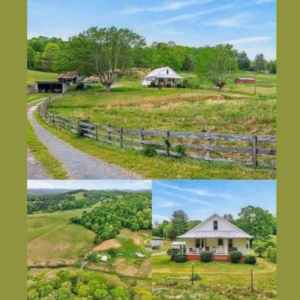
She grew up on a quiet farm, a landscape defined by the rhythmic hum of insects and the heavy stillness of rural life. From the outside, everything looked peaceful—open fields, long sunsets, a simple existence untouched by the noise of the world. But behind that calm surface, something far more complicated was taking shape. Beneath the silence, tension lived and grew, waiting for the moment it would finally break.
And when it did, it changed everything.
Left with just three hundred dollars and the emotional aftermath of a devastating family tragedy—one that involved her own mother—she found herself standing at the edge of a life she no longer recognized. The safety she once knew was gone. The future she had imagined no longer existed. What remained was uncertainty, grief, and a decision she hadn’t expected to face so soon: give in to what had happened, or find a way to move forward through it.
That moment didn’t just hurt—it reshaped her.
The loss of her father and the unraveling of her family forced her to grow up faster than she should have. While others her age were focused on ordinary things, she was learning how to survive emotional weight most people never encounter. The home that once defined her became something she had to leave behind, not just physically, but mentally as well.
There was a tree at the edge of the property—tall, unmoving, always there. It had witnessed everything: the quiet days, the tension, the breaking point. For her, it became more than just part of the landscape. It was a symbol of everything she had been—and everything she needed to move beyond.
When the legal battles faded and the noise settled, she was left with very little. No clear direction. No safety net. Just a small amount of money and a decision that would define the rest of her life.
So she left.
She walked away from the farm, from the expectations of a town that only knew her story in fragments, and from the memories that threatened to hold her in place. With barely anything to her name, she chose the unknown over the familiar. The city, with its chaos and anonymity, became her next chapter.
It wasn’t easy.
There were long nights in small, uncomfortable spaces. Jobs that barely paid enough to get by. Moments where doubt crept in and whispered that maybe the past would always follow her. But she kept going. Because once you’ve already lost so much, fear begins to lose its power.
She carried the memory of that farm with her—not as a burden, but as a reminder. A reminder of what she had endured. Of what she had survived. Of how far she had already come.
Her eventual rise wasn’t sudden, and it wasn’t luck. It was built slowly, step by step, through persistence and a quiet refusal to let her past define her limits. She took the pain that could have silenced her and transformed it into something else—something meaningful, something strong enough to reach others.
When she finally stepped into the spotlight, people saw success. But what they didn’t see was everything it took to get there. The loss. The rebuilding. The decision, made over and over again, to keep moving forward.
Today, her story resonates far beyond where it began. Not because it’s perfect, but because it’s real. Because it shows that even when everything falls apart, something new can still be built.
She is proof that where you start does not determine where you end.
And sometimes, the most powerful transformations don’t begin with opportunity—
they begin with nothing at all… and the choice to rise anyway.