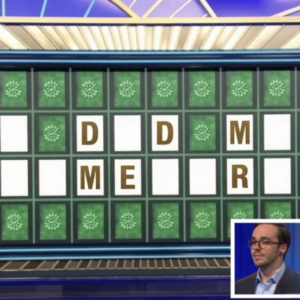
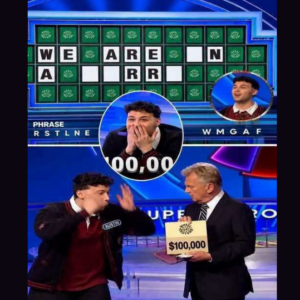
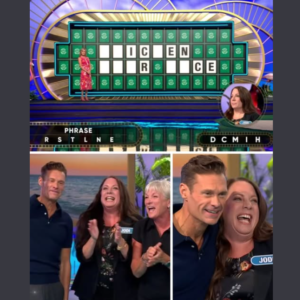
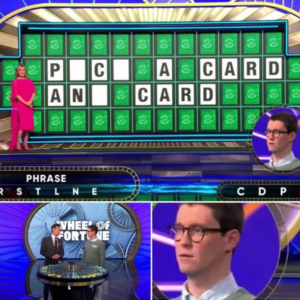
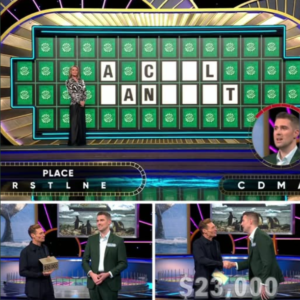
A recent episode of Wheel of Fortune sparked a surprisingly intense online debate after a puzzle phrase left viewers divided and social media buzzing. The phrase in question — “Feeling transported” — seemed simple at first glance, yet it quickly became one of those unusual game-show moments that people could not stop discussing long after the episode ended.
For many viewers watching at home, the puzzle felt strangely confusing and awkward compared to the more familiar phrases typically featured on the show. As contestants tried to work through the letters on screen, audiences online began reacting in real time, questioning whether the phrase even sounded natural in everyday conversation.
Within minutes, clips and screenshots from the episode began circulating across social media platforms, where fans debated whether the puzzle was clever, overly abstract, or simply poorly written. Some viewers joked that the phrase sounded like it had been generated by artificial intelligence, while others argued that it felt unnecessarily complicated for a fast-paced game built around quick recognition and common expressions.
Part of the confusion came from the way the phrase can be interpreted emotionally rather than literally.
To some viewers, “feeling transported” sounded incomplete or unnatural because it is not a phrase people commonly use in casual conversation. But others quickly defended the puzzle, pointing out that the expression refers to the emotional sensation of being mentally or emotionally carried somewhere else through art, music, books, memories, or personal experiences.
Fans defending the clue explained that people often describe themselves as being “transported” by a powerful song, an emotional film scene, or a nostalgic memory that briefly makes them feel removed from their present surroundings. From that perspective, they argued, the phrase was perfectly valid — simply more poetic or reflective than audiences expected from the show.
As debate intensified online, the moment became larger than the actual competition itself.
Many longtime viewers noted that unusual or abstract phrases have appeared on the show before, though few have triggered such a strong reaction. Some believed the criticism was exaggerated and fueled mainly by social media’s tendency to amplify even small moments into major controversies.
Others argued that the backlash revealed an interesting challenge facing long-running television shows: balancing creativity with familiarity. While unique phrases may keep puzzles fresh and unpredictable, viewers often expect clues to feel immediately recognizable under the pressure of gameplay.
Amid all the discussion surrounding the controversial puzzle, the actual competition continued as normal.
Contestant Gregg Liebgold performed strongly throughout the episode and ultimately advanced to the Bonus Round after accumulating more than $21,000 in winnings during the main game. Like many contestants before him, he then faced the intense pressure of solving one final puzzle with only seconds remaining on the clock.
The Bonus Round answer turned out to be “fuse box.”
Despite narrowing down some of the letters, Gregg was unable to solve the puzzle before time expired, costing him the chance to win an additional $40,000 prize. Viewers sympathized with the difficult miss, especially because the phrase seemed obvious to many watching comfortably from home.
Still, even Gregg’s near-win was overshadowed by the continuing online conversation about “Feeling transported.”
That phrase remained the true headline of the episode.
For some fans, it represented a refreshing break from repetitive puzzle patterns and showcased a more thoughtful, emotional use of language. For others, it felt too vague and unconventional for a game that depends heavily on speed and immediate recognition.
The debate highlighted something fascinating about shows like Wheel of Fortune: even a few simple words on a puzzle board can trigger wildly different reactions depending on personal experience, language habits, and interpretation.
In the end, the viral moment was not really about whether the phrase was technically correct.
It was about perception.
Some people instantly understood the emotional meaning behind the clue, while others stared at it in confusion, convinced it sounded wrong. And that gap between interpretation and certainty is exactly what turned a routine puzzle into one of the most talked-about moments of the week.
For a game show built around language, letters, and quick thinking, perhaps there is no better reminder that words do not always land the same way for everyone — especially under bright studio lights and ticking countdown clocks.